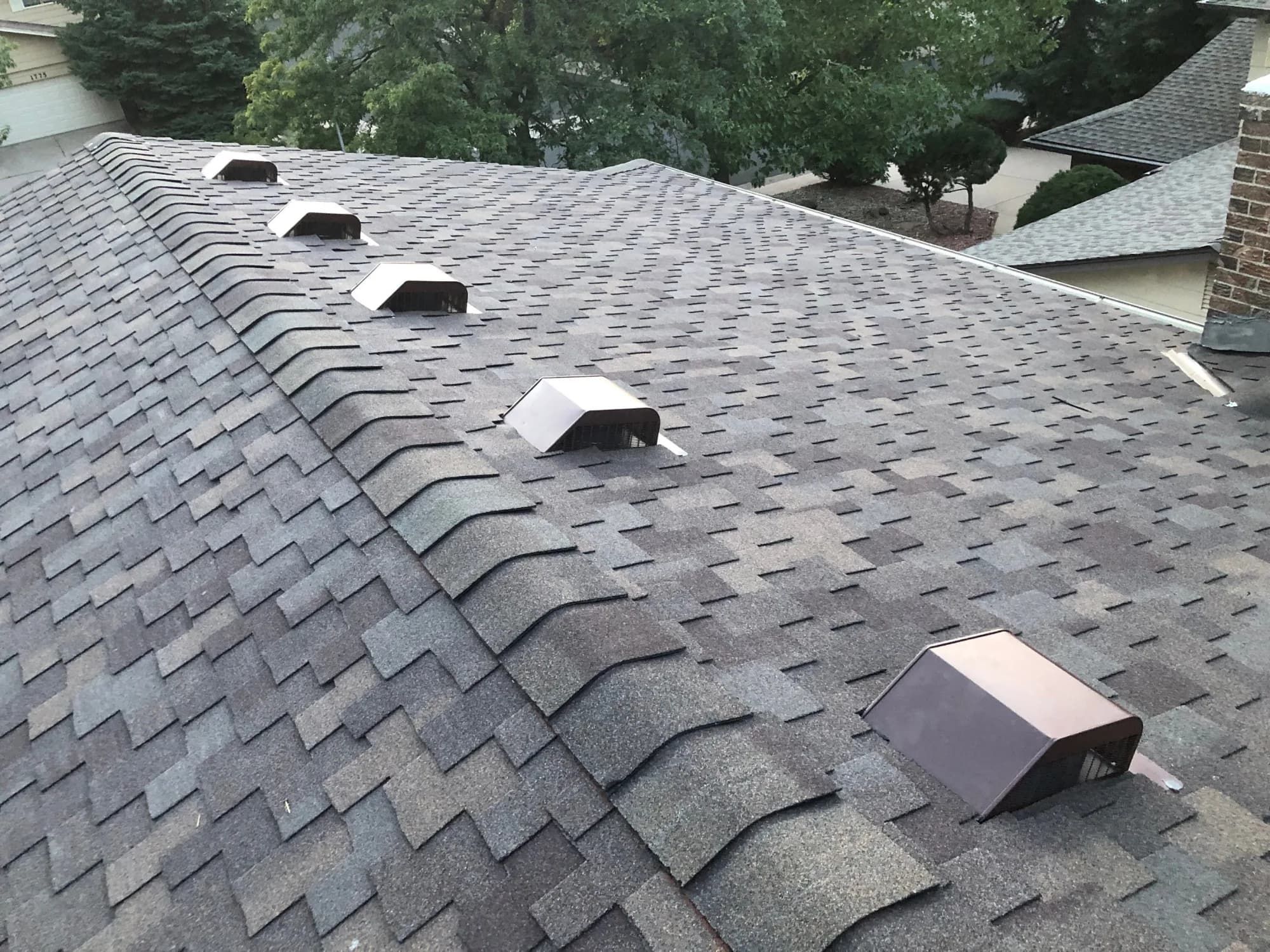
Colorado storm damage roofing from hail, wind, or lightning requires fast response and expert documentation. Red Hawk offers same-day emergency tarp service and 24-hour damage assessment for insurance claims — rapid response minimizes interior water damage.
About Storm Damage Roof Repair in Aurora
When severe weather hits the Front Range, Red Hawk Roofing responds. We tarp emergency leaks, document damage for your insurer, and restore your roof to better-than-original condition.
Storm Damage Roof Repair in Aurora, Colorado often involves rapid emergency response after wind, hail, or lightning damage — same-day tarping stops active leaks before interior damage compounds, then a full damage assessment supports the insurance claim. Red Hawk Roofing has documented 5 hail events in Aurora since 2021 — the most recent being 1.75-inch hail on August 13, 2026 — which is the kind of event that triggers our 24-hour storm response queue across the Front Range.
Our Aurora crews also serve Centennial East and Parker — all within our standard Aurora response time. Same crew, same warranty.
Aurora's housing stock skews newer — most roofs are 8-15 years old and on Class 3 or upgraded Class 4 shingles, but the 2018-2024 hail seasons stressed even the upgraded materials. We work directly with every major Colorado carrier — including State Farm, USAA, Allstate, Farmers, American Family, and Liberty Mutual — and handle the adjuster process end to end on Aurora claims. Aurora has stricter mid-replacement inspection requirements than most Front Range cities; we schedule the city inspection to land between tear-off and dry-in.
For storm damage roof repair in Aurora, expect: free roof inspection, adjuster-grade photo documentation, written scope of work, insurance liaison if applicable, and same-day emergency tarp, photo-documented damage assessment, mitigation invoice formatted for insurance reimbursement, and full-restoration scope of work. Most storm damage roof repair projects in Aurora complete within 4 hours of your call for the emergency tarp, with full repair scheduled inside the following 7–14 days.
24-hour emergency tarp serviceWind, hail, and tree-impact damageInsurance documentationManufacturer-warrantied materials
Common Questions: Storm Damage Roof Repair in Aurora
Wind damage shows as lifted, creased, or missing shingles, exposed nail heads, torn flashings, and debris embedded in the roof field. Creased shingles are the most commonly missed sign — the shingle is still in place but the seal has broken, and it will fail in the next storm. Granule trails on the ground around the home indicate wind has scoured the field. Colorado's chinook winds and downslope events regularly exceed 80 mph along the Front Range, so any sustained wind event over 50 mph warrants a free inspection.
First, stay off the roof — wet shingles, hail, and structural damage make it unsafe. From the ground, photograph any visible damage, debris, and water entry points with timestamps. Catch interior leaks with buckets and move valuables. Call Red Hawk for emergency tarping if active leaks exist; we respond within 4 hours during business hours across the Front Range. Then notify your insurance carrier within 48–72 hours to start a claim — early reporting protects you. Don't sign any contractor agreements before getting a real estimate.
Yes — Red Hawk provides 24-hour emergency tarp service across the Front Range to stop active leaks while you file your claim. Crews are typically on-site within 4 hours during business hours, faster during declared major storm events. Tarp cost is usually covered by your insurance policy as a mitigation expense (we document for the claim), and we apply secured tarps designed to last 30–60 days until permanent repair. Permanent repair is scheduled separately once weather clears and the claim is approved.
Aurora asphalt roof replacements typically run $15,000 to $25,000, with most Saddle Rock, Tollgate Crossing, and Tallyn's Reach homes landing $15,000–$25,000 for Class 4 impact-resistant installs. Aurora's high hail frequency makes Class 4 the default specification on most insurance jobs. Red Hawk's Aurora GBP location at (970) 639-7993 provides free written estimates with line-item pricing — no high-pressure sales, no surprise change orders.
Yes — Aurora sits in the highest-frequency hail-exposure zone of the Denver metro, where eastern-plains supercells mature directly overhead. The ground record shows 5 documented hail days within 10 miles of the city between 2021 and 2026, all confirmed by NWS storm spotters, the largest a 2.75-inch measurement on May 30, 2024 (49 ground reports) — one of the most heavily reported hail days in the metro that year. Roofs older than 8–10 years in Aurora almost certainly carry cumulative impact damage and qualify for claim review.
Aurora requires a building permit for every tear-off and reroof, issued through the Building Division at 15151 E Alameda Pkwy. Permit fees run $90–$280 depending on roof valuation. Aurora enforces strict ice-and-water shield (24 inches inside the heated wall), synthetic underlayment, and ventilation balance requirements. Red Hawk pulls all permits, schedules the post-install inspection, and handles HOA submission packets — homeowners never file paperwork. Arapahoe County (for unincorporated areas) and Adams County (north Aurora) use slightly different fee schedules.
Recent Storm Damage Roof Repair Near Aurora
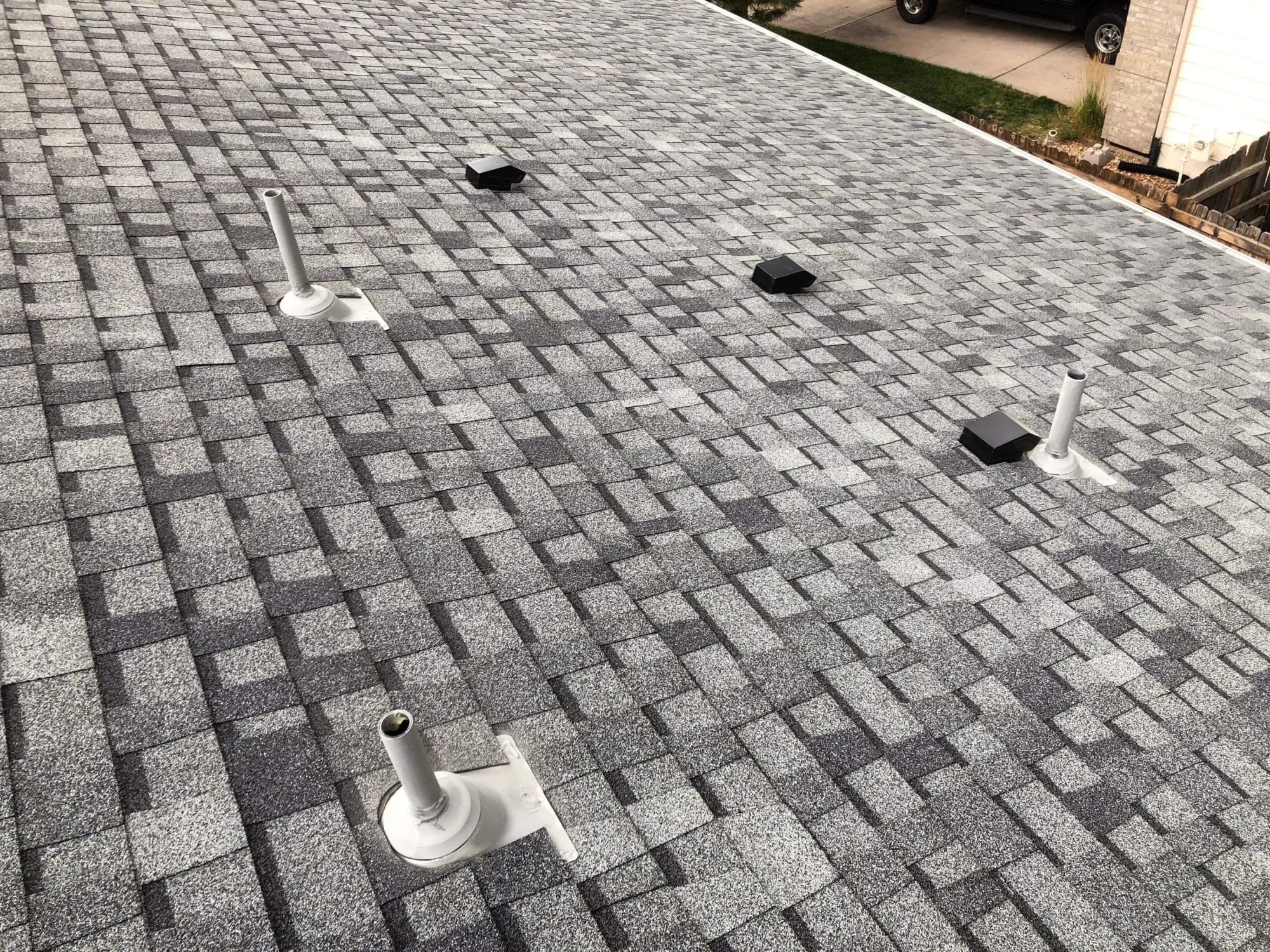
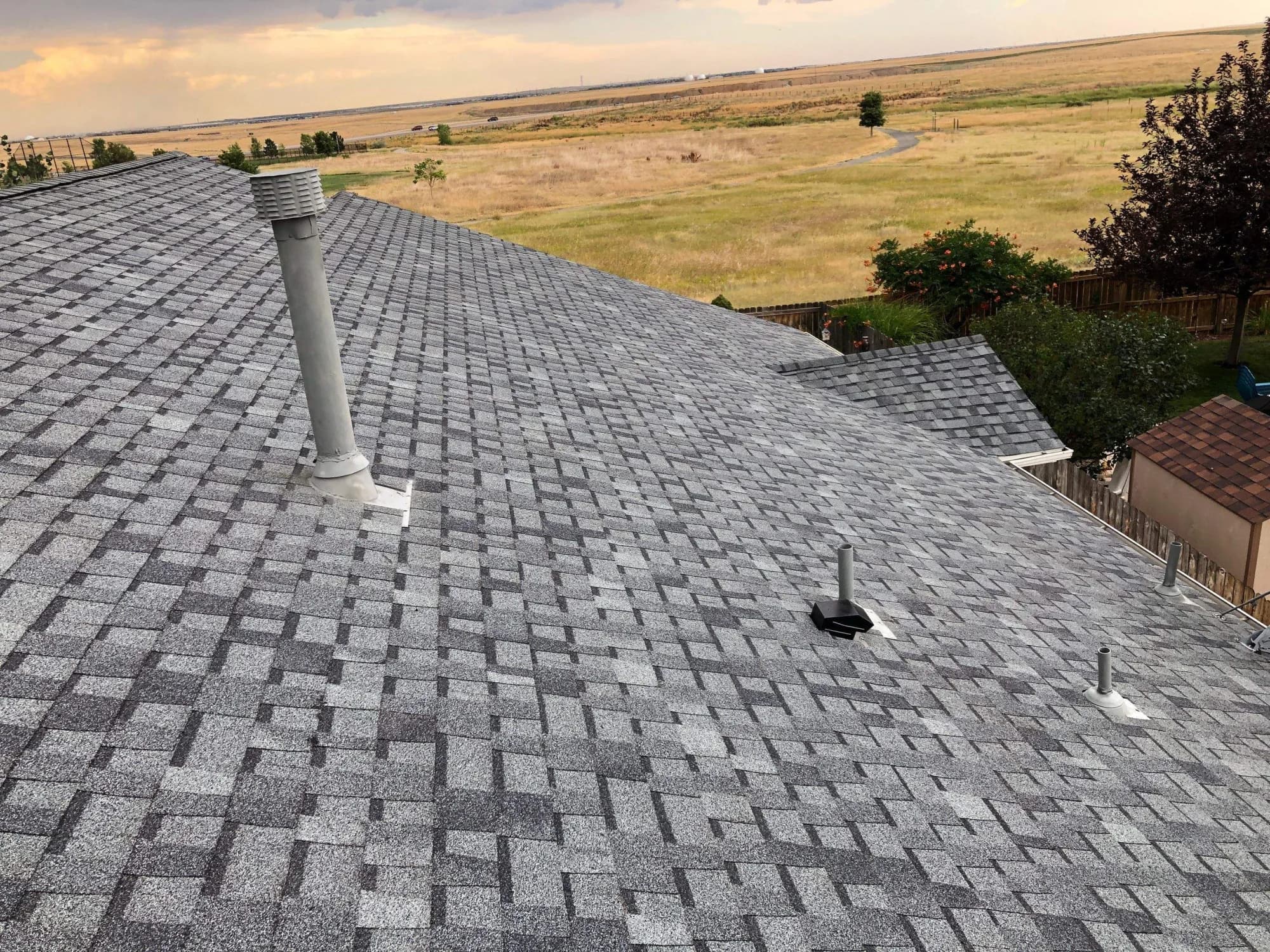
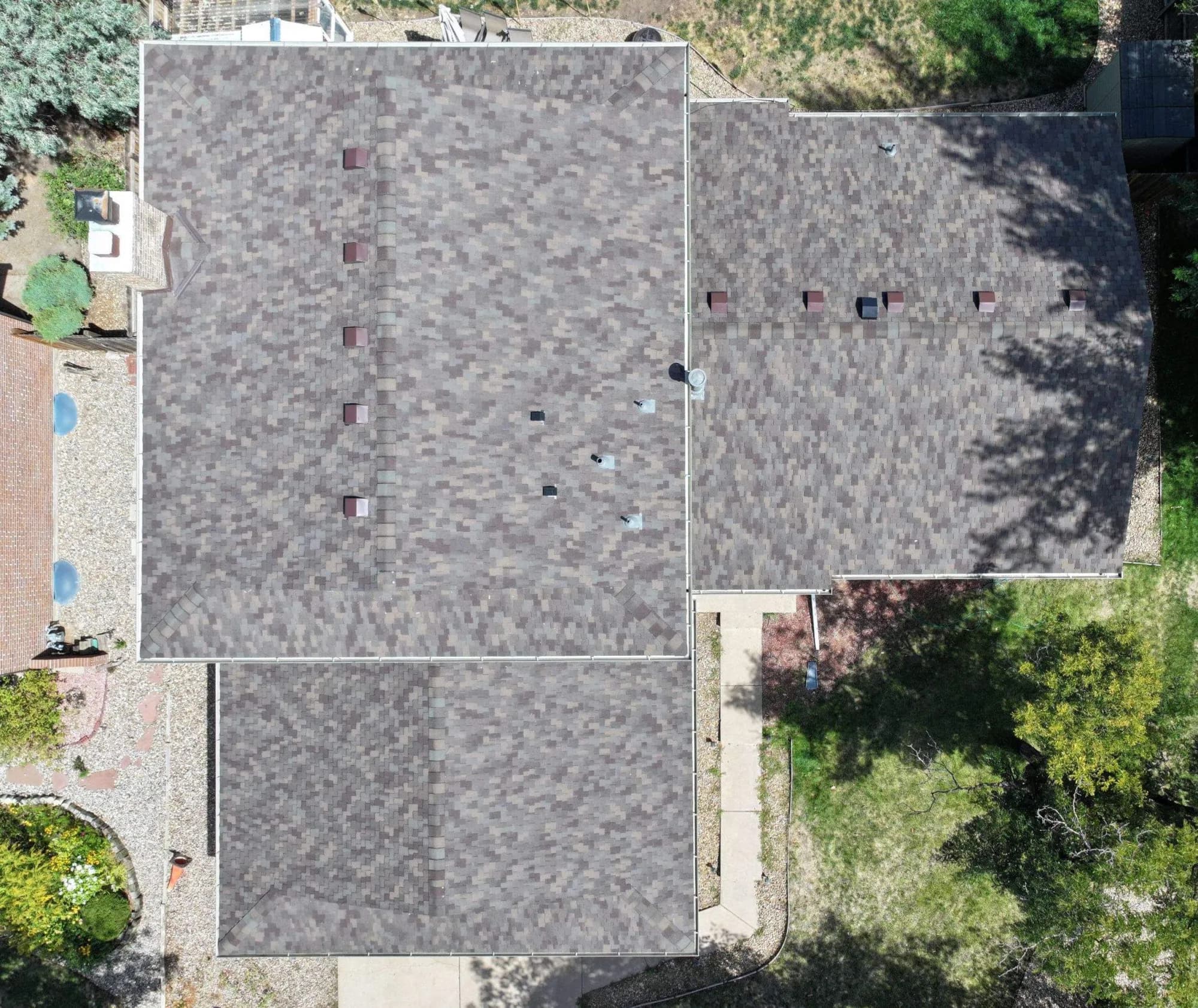
Real storm damage roof repair jobs from across the Front Range — material variety, install detail, and finished results.
Aurora PABCO Prestige
PABCO Prestige Complete
Aurora Presidential Shake
Presidential Shake Detail
Project photography from Red Hawk Roofing's own portfolio. All installations performed by licensed, insured Red Hawk crews.
Hail History in Aurora
Aurora has 5 documented hail days within 10 miles of city center between 2021 and 2026 — 5 confirmed by NWS storm-spotter reports on the ground, the largest 2.75-inch hail measured on May 30, 2024 (49 reports), where NOAA radar indicated 3.75 inches — 1.0 inch above the measured size. Radar figures are NOAA SWDI estimates (MEHS), not measurements; ground figures are NWS Local Storm Reports.
Aug 13
2026
1.75"
Measured
7 reports
radar 3.00" (+1.25")
LSR+SWDI
Jun 1
2026
1.75"
Measured
12 reports
radar 2.25" (+0.50")
LSR+SWDI
May 30
2024
2.75"
Measured
49 reports
radar 3.75" (+1.00")
LSR+SWDI
Jun 29
2023
2.00"
Measured
11 reports
radar 3.00" (+1.00")
LSR+SWDI
May 10
2023
1.75"
Measured
16 reports
radar 3.00" (+1.25")
LSR+SWDI
Measured figures are NWS Local Storm Reports — human-observed, ground-confirmed hail. Radar-indicated figures are NOAA SWDI estimates (MEHS, a radar algorithm calibrated to a high-end bound) — not measurements, and they can run high versus paired ground reports. Events within ~10 miles of Aurora center, 2021–present, ≥1.0 inch.
Loved our work in Aurora?
Scan to leave us a Google review for our Aurora office.