Hail Damage Roof Repair in Colorado
Colorado is in the heart of Hail Alley. We document and restore hail-damaged roofs with insurance experience.
- BBB A+
- 291 Google Reviews · 4.9★
- Avalanche & Nuggets Partner
Hail damage roofing claims in Colorado typically qualify for full replacement once damage exceeds the insurance carrier's threshold. Red Hawk documents the full damage extent, meets your adjuster, and handles all supplements. Insurance usually covers 100% minus your deductible.
About Hail Damage Roof Repair
The Front Range averages 3–4 damaging hail events per year. Red Hawk Roofing specializes in identifying hail damage that insurance adjusters miss, building defensible photo documentation, and restoring your roof to factory-new condition.
Why Red Hawk?
- Free hail damage inspection
- Insurance claim documentation
- Adjuster meeting representation
- Manufacturer-spec restoration
Related Services
Hail Damage Roof Repair — FAQ
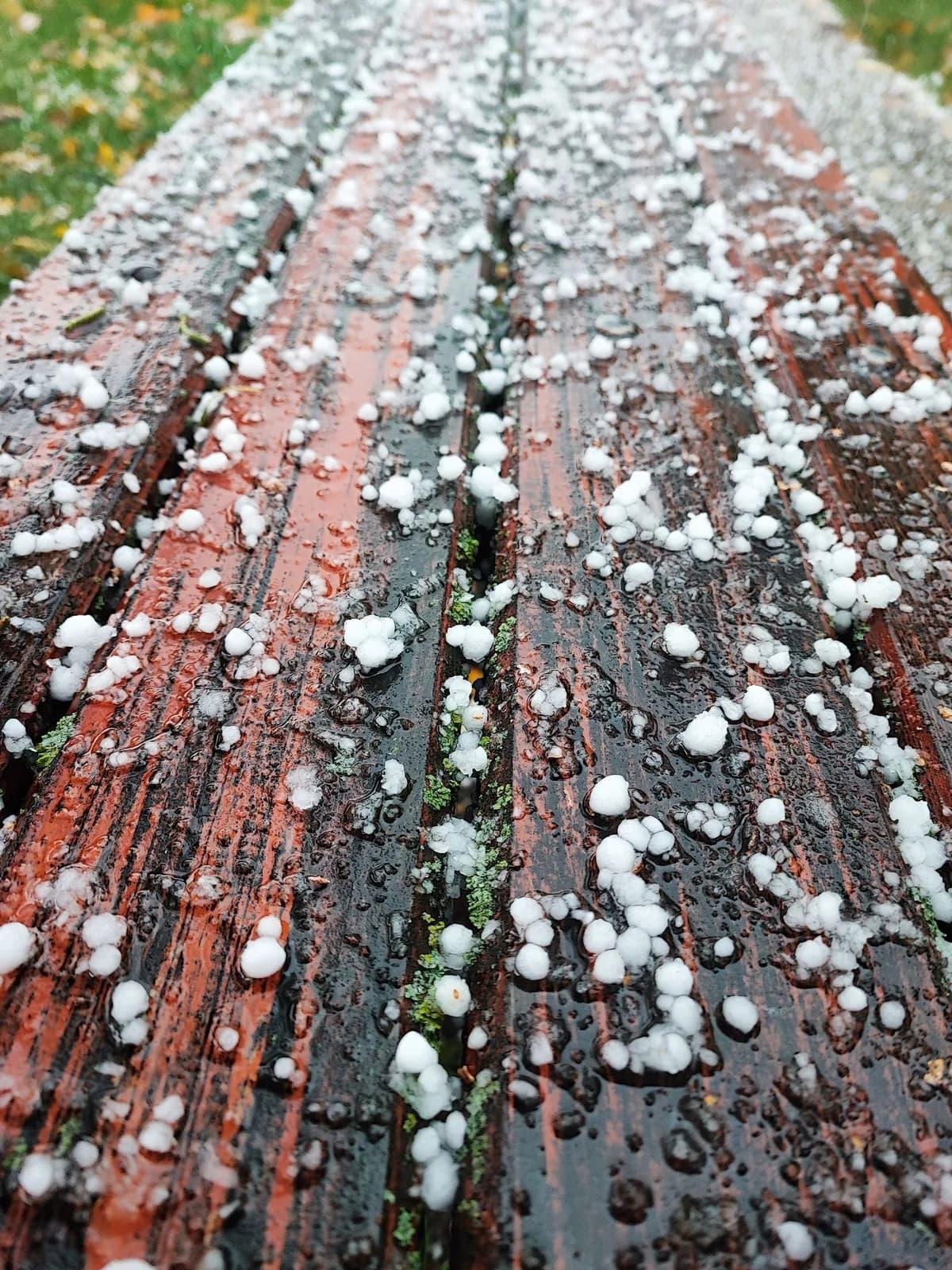
Hail damage on asphalt shingles looks like dark, circular bruises 0.5–2 inches across, exposed black mat fibers where granules have been knocked off, and shingle surfaces that feel soft when pressed. Most damage is invisible from the ground. Other indicators: dented gutters and downspouts, dimpled metal vents, cracked skylight covers, and shredded screens. The Front Range averages 3–4 damaging hail events per year, so any hailstorm with stones over 1 inch warrants a free Red Hawk inspection within 30 days.
Hail at or above 1 inch in diameter (quarter-sized) typically damages standard 3-tab asphalt shingles. Architectural shingles usually need 1.25–1.5 inch hail (golf-ball sized) for functional damage. Class 4 impact-resistant shingles can handle 1.75–2 inch (egg-sized) hail without functional failure. Wind direction during the storm matters too — hail driven sideways at 60+ mph damages siding and windows even at smaller sizes. The NWS and SPC archive every reported hail size, which Red Hawk references in claim documentation.
Most hail damage is invisible from the ground. Granule loss spots, mat bruising, soft shingles, hidden cracks under tabs, and damaged underlayment all require on-roof inspection to detect. Adjusters and homeowners checking from a ladder routinely miss 40–60% of the actual damage. Red Hawk's inspectors walk every slope, mark each strike with chalk for photo documentation, and measure damage density per square. This is why a free professional inspection — not a drive-by or ladder check — is critical after any hailstorm.
Most Colorado homeowner policies allow 1 year from the storm date to file a hail claim, but some carriers extend to 2 years and a few limit to 6 months. Check your policy's loss reporting clause. Don't wait — damage worsens through subsequent storms and freeze-thaw cycles, and adjusters can argue the damage came from a later, uncovered event. Red Hawk recommends filing within 60 days of the storm. We document the storm date with NWS data and SPC hail reports so the claim is defensible.
Functional hail damage compromises the shingle's ability to shed water — granule loss exposing mat, fractured shingles, or broken seal strips. Insurance covers functional damage as it shortens roof life and risks leaks. Cosmetic damage (small surface marks on metal vents, painted finishes) doesn't affect performance. Many policies now include cosmetic exclusion endorsements that limit coverage on metal roofs and gutters, so check your policy. Red Hawk's documentation specifically establishes functional damage with measurements and photos that meet adjuster standards.
For most Colorado homeowners, yes — but for the lifespan, not the insurance discount. Class 4 IR shingles add about $1.00–1.50 per square foot, roughly $2,000–3,000 on a typical 2,000 sq ft roof (Colorado Roofing Association). Colorado carriers commonly discount 5–25% off the wind/hail portion of the premium, typically $150–600 a year, so the upgrade takes roughly 5–15 years to repay on premium savings alone. The stronger case: Class 4 lines reach 25–30 years in Colorado vs 18–25 for standard architectural, and a roof that survives a storm is a deductible you don't pay. Brands like TAMKO Heritage IR, GAF Timberline AS II, and Owens Corning Duration STORM carry UL 2218 Class 4 ratings. Red Hawk recommends Class 4 on every Colorado replacement.
Yes — most major Colorado insurers including State Farm, Allstate, USAA, American Family, Farmers, and Liberty Mutual offer 5–30% discounts on the wind/hail portion of homeowners premiums for UL 2218 Class 4 impact-resistant roofs. The discount typically saves $150–$600 per year. You'll need a manufacturer's certificate confirming Class 4 rating and the install date — Red Hawk provides this paperwork the day install completes. Submit to your insurer's policy admin team to apply the discount immediately.
Schedule a free Red Hawk inspection within 30 days of any hailstorm where stones exceeded 1 inch. Filing claims within 30–60 days is the strongest position — adjusters can match damage to the specific storm using NWS data, and the chain-of-events is clean. Waiting beyond 6 months risks claim denial or partial coverage as carriers argue the damage came from later, uncovered events. Red Hawk runs free inspections year-round across the Front Range, with priority scheduling after major storm events.
In Colorado, individual hail claims usually don't trigger a personal premium increase because hail is treated as a regional event, not a homeowner risk factor. However, multiple claims within 3–5 years (any cause) can flag your file. Carriers also raise base premiums across hail-prone zip codes after major storm seasons regardless of whether you filed. The choice isn't "file and pay more" versus "don't file and stay flat" — it's "file or absorb $15K–$25K of damage out of pocket." Almost always, file.
Yes, in two ways. First, older roofs (15+ years) take damage more easily — shingles get brittle, lose flexibility, and crack under impacts a newer roof would survive. Second, your settlement basis differs by policy: ACV (actual cash value) policies depreciate the payout based on roof age, often paying 30–60% of replacement cost on old roofs. RCV (replacement cost value) policies pay full replacement regardless of age. Red Hawk reviews your policy declarations page during the inspection to set expectations correctly.