Red Hawk Roofing repairs roofs in Colorado for leaks, missing shingles, flashing damage, and hail hits. Same-day emergency tarp service available. We provide free inspections with photo documentation, and any workmanship warranty that applies to your repair is confirmed in writing before work begins.
About Roof Repair in Louisville
Not every roof problem requires replacement. We diagnose and repair leaks, wind damage, popped nails, deteriorated flashing, and ice-dam damage with the same care as a full install.
Roof Repair in Louisville, Colorado often involves fixing isolated wind, hail, or flashing damage rather than committing to a full replacement when the rest of the roof is in good shape. Red Hawk Roofing has documented 5 hail events in Louisville since 2021 — the largest being 2.25-inch hail on May 30, 2024 — which produces the kind of partial-slope, single-flashing, or pipe-boot damage we routinely repair without a full tear-off.
Our nearest office to Louisville is in Englewood at 3535 S Platte River Dr # A. We dispatch Englewood-based crews from there for Louisville projects — same crew, same warranty.
Louisville's housing mix runs heavy on 1990s-2010s subdivisions; the post-Marshall Fire rebuild stretch also added a band of new construction we frequently inspect for storm follow-up. We work directly with every major Colorado carrier — including State Farm, USAA, Allstate, Farmers, American Family, and Liberty Mutual — and handle the adjuster process end to end on Louisville claims. City of Louisville permits residential roofing; we file the application and coordinate the inspection.
For roof repair in Louisville, expect: free roof inspection, adjuster-grade photo documentation, written scope of work, insurance liaison if applicable, and leak diagnosis with attic moisture trace, photo-documented repair scope, color-matched shingle replacement, and any applicable workmanship warranty confirmed in writing before work begins. Most roof repair projects in Louisville complete within 2–6 hours on the same day the crew arrives for most repairs.
Most residential roof repairs in the Denver metro fall between $350 and $1,500. Minor work like resealing a pipe boot, replacing a few shingles, or patching a small leak typically runs $350–$650. Mid-scope repairs — section shingle replacement, valley flashing rework, or skylight reseal — run $700–$1,500. Larger storm-related fixes can exceed $2,500. Red Hawk provides free written estimates with photo documentation. If insurance is involved, we document the damage in adjuster-ready format at no charge.
If the damage is localized and your roof is under 15 years old with the rest of the shingles in good shape, repair is the right call. If shingles are widely curling, you've had multiple leaks in different areas, or the roof is 20+ years old, replacement is more cost-effective long-term. The 30% rule is useful: if repairs would cost more than 30% of replacement, replace. Red Hawk's free inspection includes a written recommendation either way — we don't push replacement when repair will do.
Most roof repairs complete in 2 to 6 hours on the same day the crew arrives. Pipe boot replacement, shingle patching, and flashing repair are typically half-day jobs. Larger section repairs or chimney flashing rework can stretch to a full day. Emergency leak stops and tarping happen the same day you call. Red Hawk schedules repairs within 48 hours of the free inspection in most cases — faster during storm season when our emergency response team is on call.
Yes — Red Hawk has worked dozens of Marshall Fire rebuild projects across Louisville's Coal Creek Ranch, Centennial Valley, and Saddleback neighborhoods. Rebuild roofs require Class A fire-rated assemblies, ember-resistant ridge venting, and code upgrades introduced after the 2021 fire. We coordinate with general contractors on rebuild sequencing and provide manufacturer-certified installs that satisfy Boulder County's post-fire compliance requirements.
Louisville and Boulder County now require Class A fire-rated roof assemblies in WUI (Wildland-Urban Interface) zones, ember-resistant ridge and soffit venting, non-combustible eave materials, and 5-foot defensible-space gutter guards. Most asphalt Class 4 shingles are Class A fire-rated, but the assembly details (underlayment, ventilation, edge conditions) require careful spec. Red Hawk handles the WUI compliance documentation as part of the permit.
Louisville asphalt roof replacements typically run $15,000 to $25,000. Marshall Fire rebuild roofs with Class A fire-rated assemblies and code-upgrade adders typically run $15,000–$25,000 depending on home size. Red Hawk provides free written estimates with line-item code-upgrade pricing. Insurance-funded replacements after hail or fire typically cover most of the cost beyond the deductible.
Recent Roof Repair Near Louisville
Real roof repair jobs from across the Front Range — material variety, install detail, and finished results.
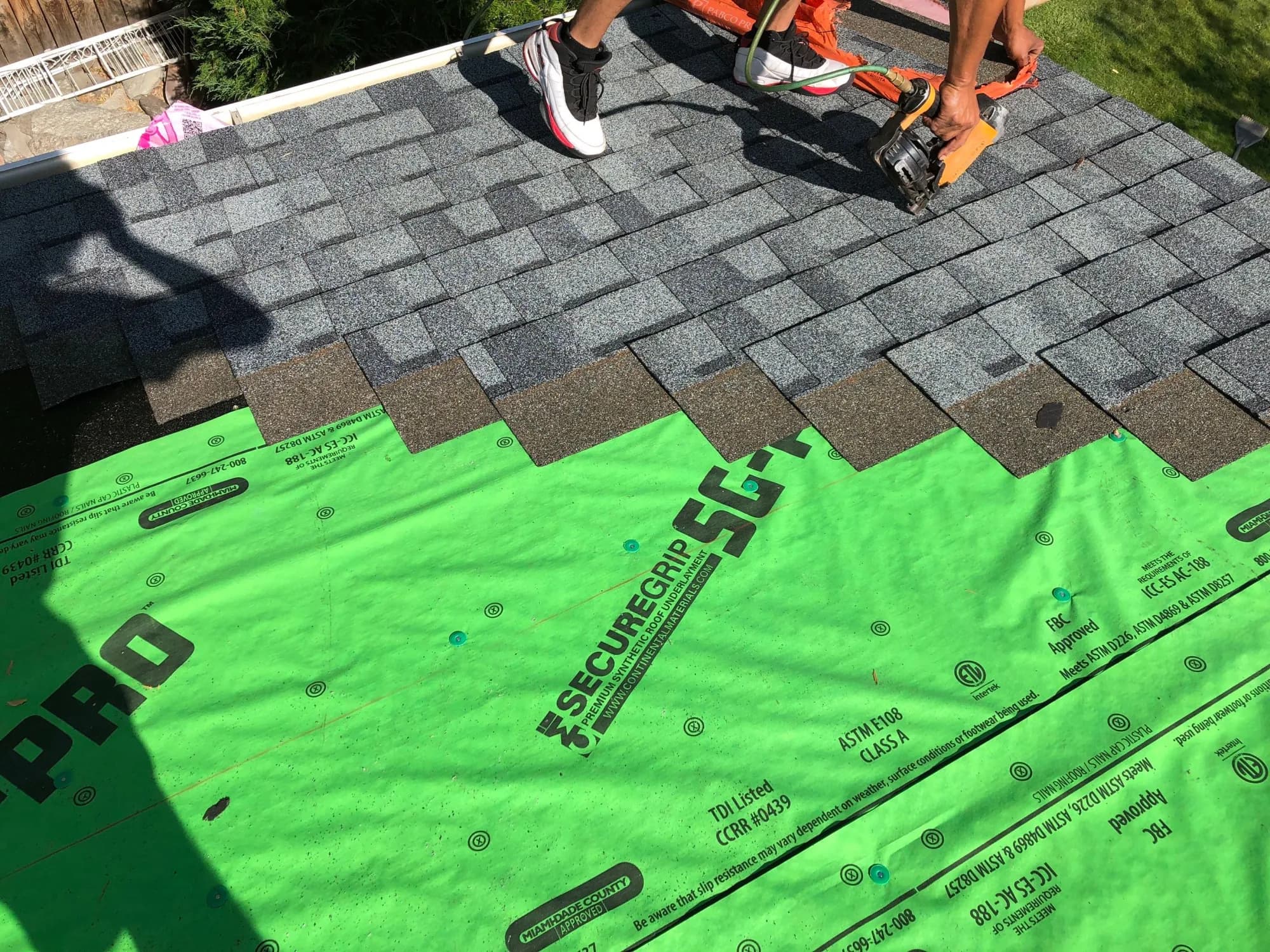
Asphalt Install In Progress
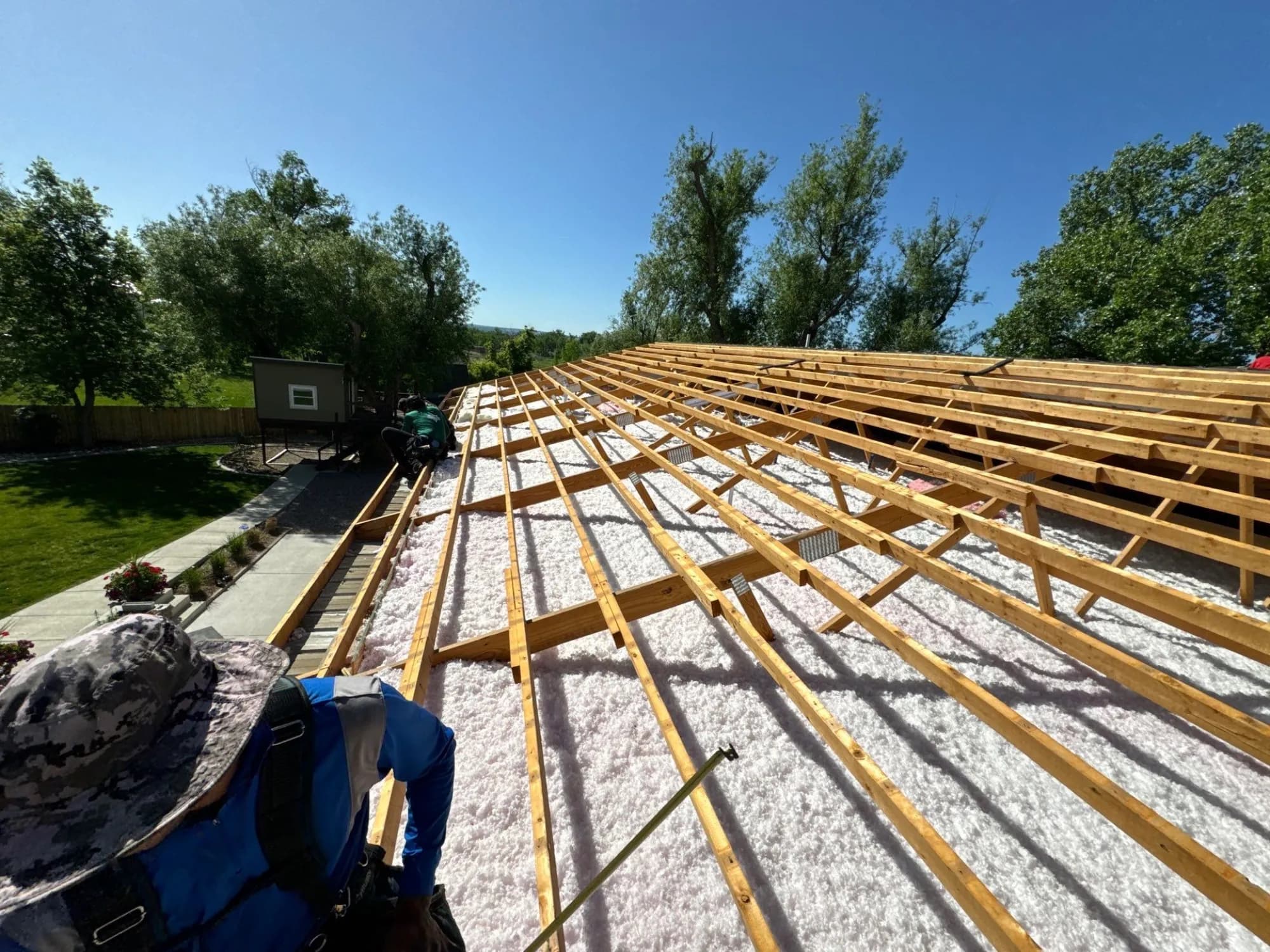
Deep Reroof with Spray Foam
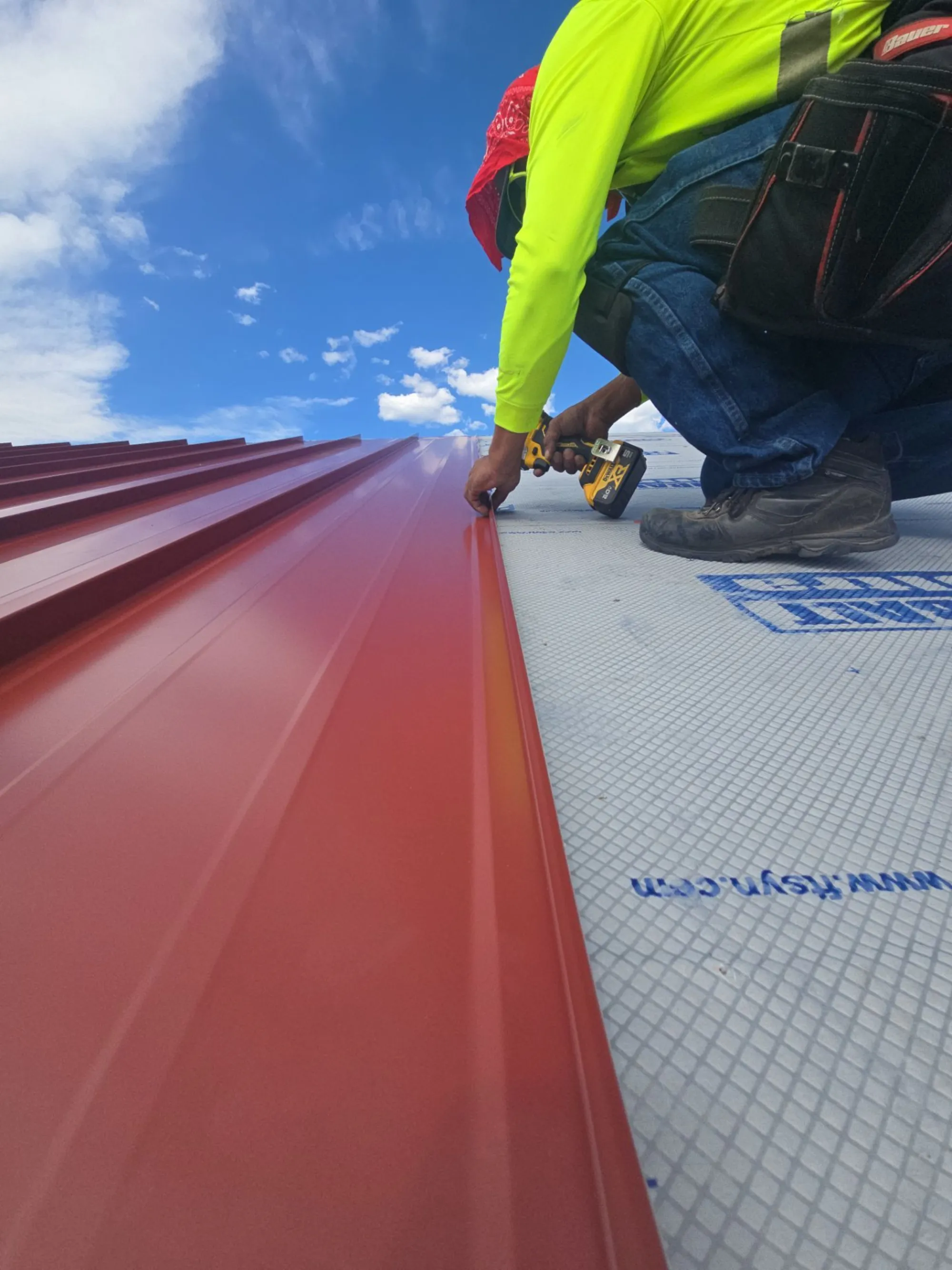
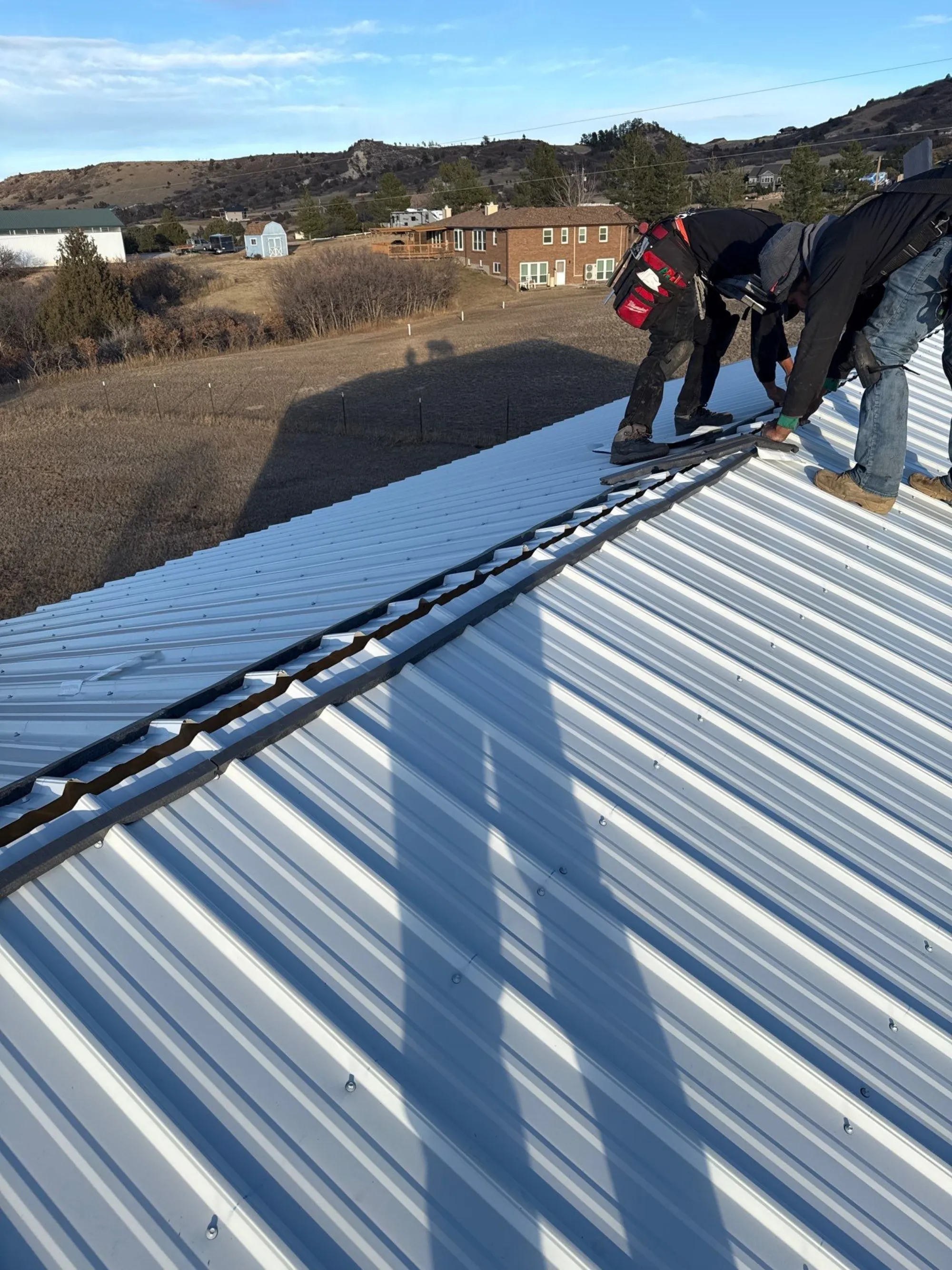
Metal Ridge Cap Detail
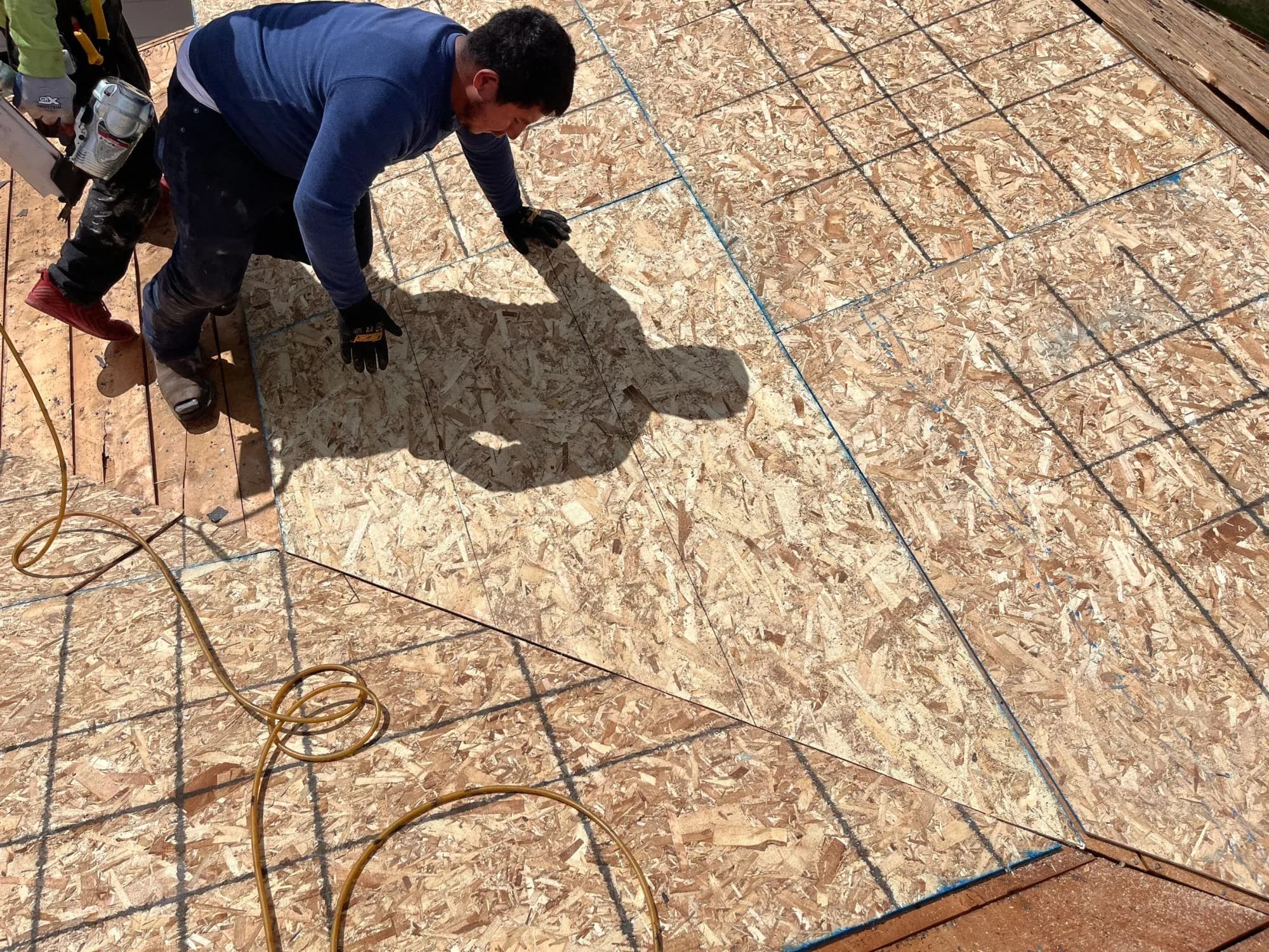
Re-decking OSB Install
Project photography from Red Hawk Roofing's own portfolio. All installations performed by licensed, insured Red Hawk crews.
Hail History in Louisville
Louisville has 5 documented hail days within 10 miles of city center between 2021 and 2026 — 5 confirmed by NWS storm-spotter reports on the ground, the largest 2.25-inch hail measured on May 30, 2024 (21 reports), where NOAA radar indicated 3.25 inches — 1.0 inch above the measured size. Radar figures are NOAA SWDI estimates (MEHS), not measurements; ground figures are NWS Local Storm Reports.
May 30
2024
2.25"
Measured
21 reports
radar 3.25" (+1.00")
LSR+SWDI
May 26
2023
1.25"
Measured
3 reports
radar 1.00" (-0.25")
LSR+SWDI
May 9
2023
2.00"
Measured
6 reports
radar 3.75" (+1.75")
LSR+SWDI
Oct 1
2022
1.50"
Measured
4 reports
radar 2.00" (+0.50")
LSR+SWDI
Aug 19
2021
1.50"
Measured
13 reports
radar 2.00" (+0.50")
LSR+SWDI
Measured figures are NWS Local Storm Reports — human-observed, ground-confirmed hail. Radar-indicated figures are NOAA SWDI estimates (MEHS, a radar algorithm calibrated to a high-end bound) — not measurements, and they can run high versus paired ground reports. Events within ~10 miles of Louisville center, 2021–present, ≥1.0 inch.