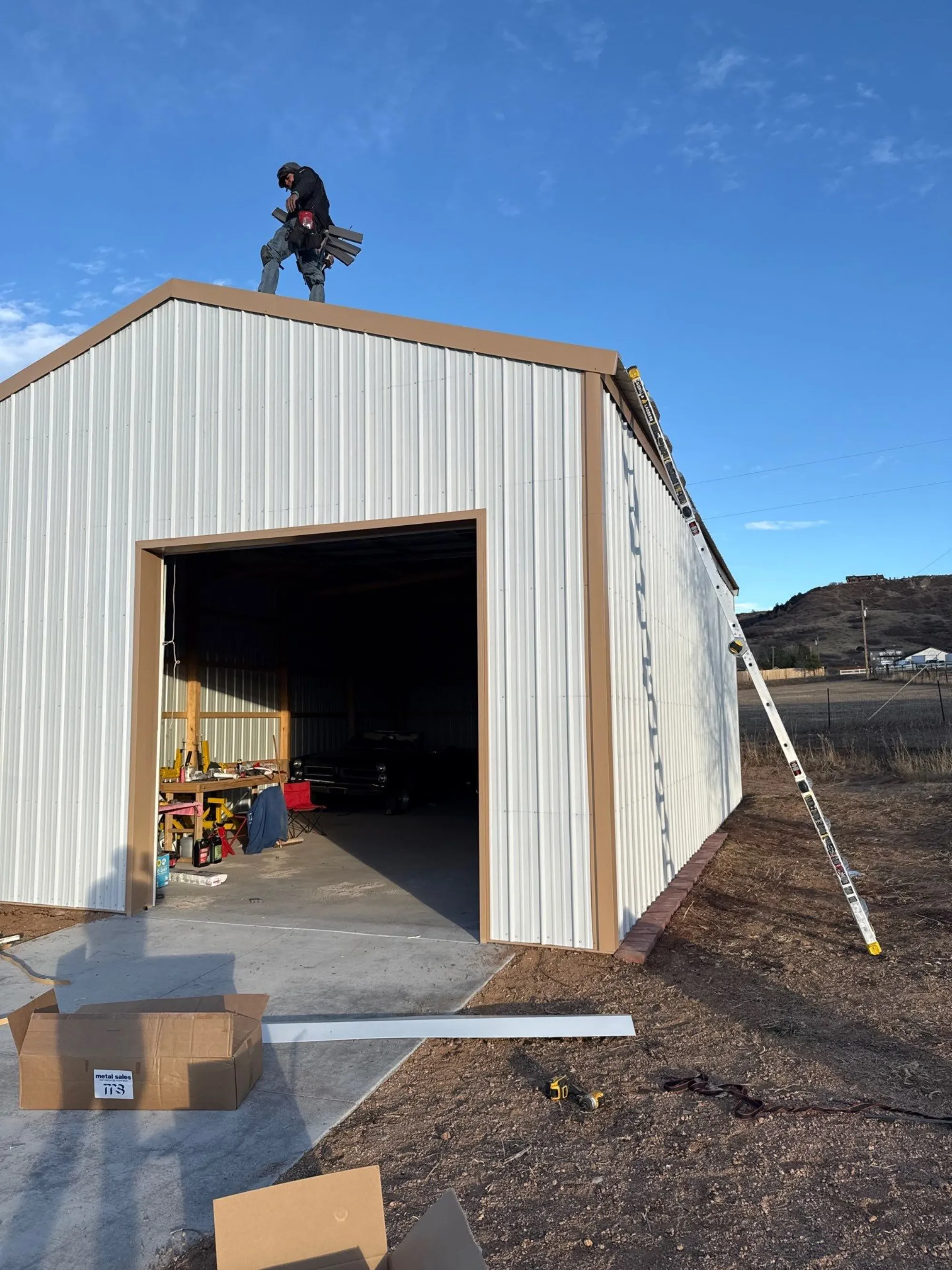
Metal roofs last 40–70 years, shed snow cleanly, and handle Colorado wind and hail well. Red Hawk installs standing-seam metal with factory-matched trim, gutters, and flashing. Metal is 2–3x the cost of asphalt but eliminates roof replacement for decades.
About Metal Roofing in Aurora
Metal roofs last 40–70 years and qualify for hail-resistance insurance discounts in Colorado. We install standing seam, stone-coated steel, and exposed-fastener systems.
Metal Roofing in Aurora, Colorado often involves upgrading from asphalt to standing-seam metal that handles Front Range wind and hail at a level no shingle product matches. Red Hawk Roofing has documented 5 hail events in Aurora since 2021 — the largest being 2.75-inch hail on May 30, 2024 — which is the size where standing-seam metal pays for itself versus repeated asphalt replacements over a 40–70-year roof life.
Our Aurora crews also serve Centennial East and Parker — all within our standard Aurora response time. Same crew, same warranty.
Aurora's housing stock skews newer — most roofs are 8-15 years old and on Class 3 or upgraded Class 4 shingles, but the 2018-2024 hail seasons stressed even the upgraded materials. We work directly with every major Colorado carrier — including State Farm, USAA, Allstate, Farmers, American Family, and Liberty Mutual — and handle the adjuster process end to end on Aurora claims. Aurora has stricter mid-replacement inspection requirements than most Front Range cities; we schedule the city inspection to land between tear-off and dry-in.
For metal roofing in Aurora, expect: free roof inspection, adjuster-grade photo documentation, written scope of work, insurance liaison if applicable, and standing-seam panel install with factory-matched trim, snow guards, hidden-fastener system, and full warranty registration with the panel manufacturer. Most metal roofing projects in Aurora complete within 5–10 days depending on roof size and complexity.
Class 4 impact-resistant40–70 year lifespanInsurance discount eligibleEnergy-efficient
Metal roofing costs meaningfully more than asphalt — standing seam is the premium option, with stone-coated steel and exposed-fastener panels below it. Red Hawk provides side-by-side written estimates so the difference is explicit for your roof rather than a general figure. The higher upfront cost is offset by 40–70 year lifespan, insurance discounts, and energy savings. Red Hawk provides side-by-side estimates so the math is clear.
Properly installed metal roofs last 40–70 years in Colorado, with standing-seam systems at the long end (50–70 years) and exposed-fastener panels at the short end (40–50 years). Stone-coated steel falls between (50–60 years). Lifespan factors include coating quality (Kynar 500 / PVDF coatings outlast standard polyester by 20+ years), substrate gauge (24-gauge outlasts 26-gauge), and fastener spacing. Compared to 20–25 years for asphalt shingles, metal is the longest-lasting roofing material available short of slate or clay tile.
Standing-seam metal in 24-gauge or thicker handles Front Range hail without functional damage on impacts up to 2 inches. Cosmetic dents are possible from large hail (1.5 inches+), but functional integrity stays intact — water-shedding and structure remain unaffected. Class 4 stone-coated steel achieves UL 2218 Class 4 rating equivalent to impact-resistant shingles. Many Colorado insurers now apply cosmetic damage exclusions to metal roofs, so check your policy. Red Hawk recommends 24-gauge standing seam as the highest hail-survival roofing for hail country.
Aurora asphalt roof replacements typically run $15,000 to $25,000, with most Saddle Rock, Tollgate Crossing, and Tallyn's Reach homes landing $15,000–$25,000 for Class 4 impact-resistant installs. Aurora's high hail frequency makes Class 4 the default specification on most insurance jobs. Red Hawk's Aurora GBP location at (970) 639-7993 provides free written estimates with line-item pricing — no high-pressure sales, no surprise change orders.
Yes — Aurora sits in the highest-frequency hail-exposure zone of the Denver metro, where eastern-plains supercells mature directly overhead. The ground record shows 5 documented hail days within 10 miles of the city between 2021 and 2026, all confirmed by NWS storm spotters, the largest a 2.75-inch measurement on May 30, 2024 (49 ground reports) — one of the most heavily reported hail days in the metro that year. Roofs older than 8–10 years in Aurora almost certainly carry cumulative impact damage and qualify for claim review.
Aurora requires a building permit for every tear-off and reroof, issued through the Building Division at 15151 E Alameda Pkwy. Permit fees run $90–$280 depending on roof valuation. Aurora enforces strict ice-and-water shield (24 inches inside the heated wall), synthetic underlayment, and ventilation balance requirements. Red Hawk pulls all permits, schedules the post-install inspection, and handles HOA submission packets — homeowners never file paperwork. Arapahoe County (for unincorporated areas) and Adams County (north Aurora) use slightly different fee schedules.
Recent Metal Roofing Near Aurora
Real metal roofing jobs from across the Front Range — material variety, install detail, and finished results.
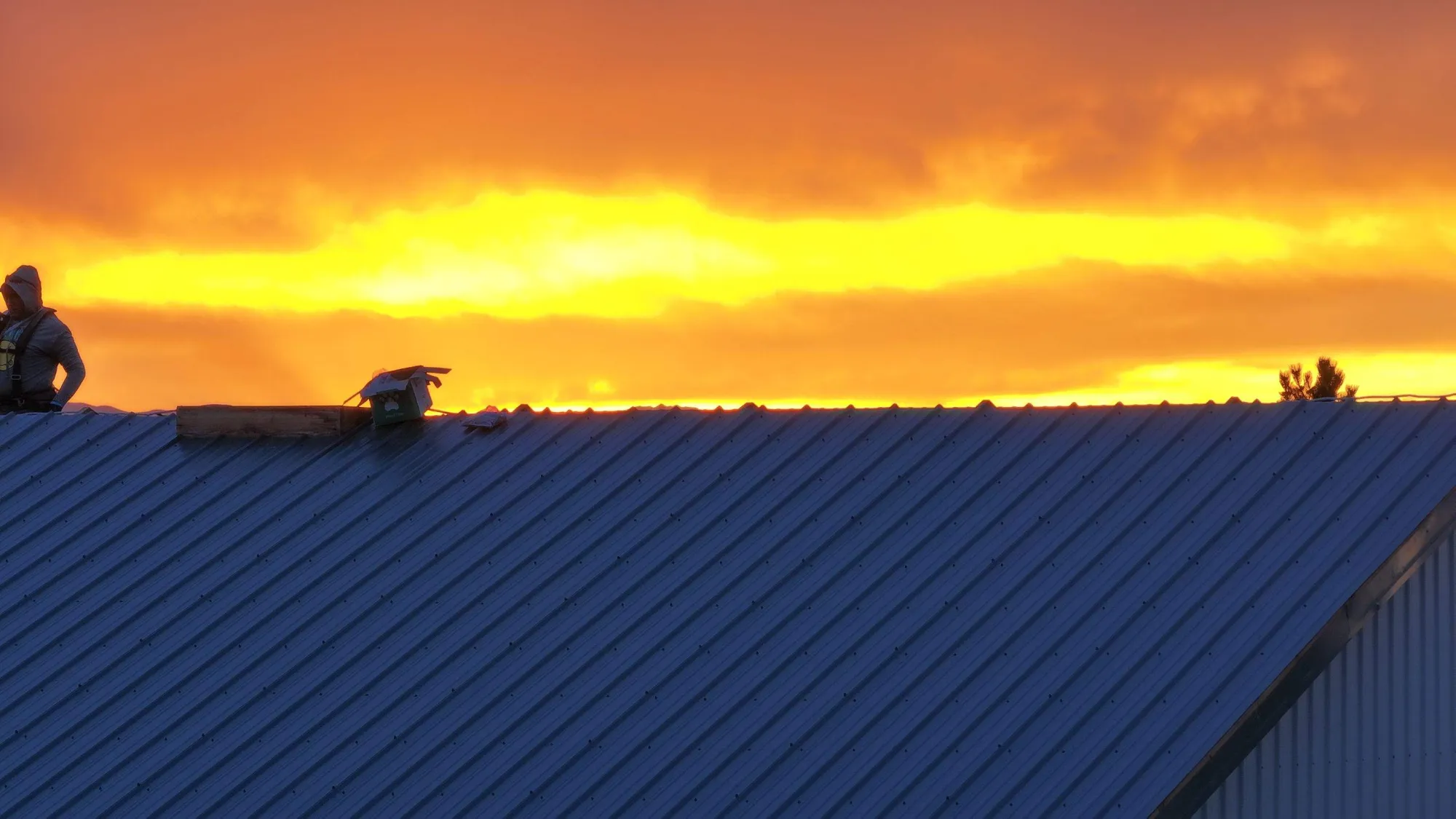
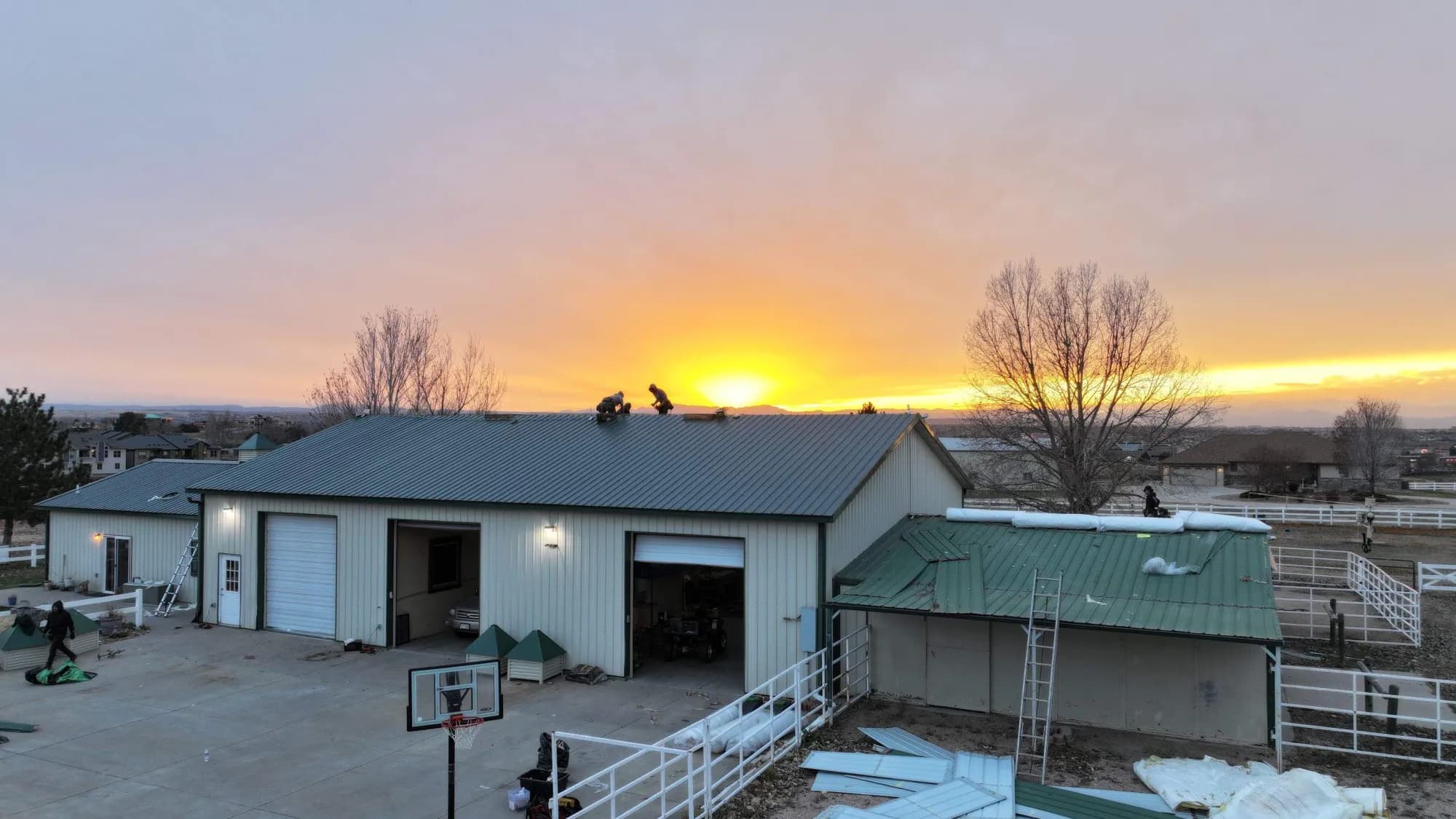
Pole Barn Metal Install
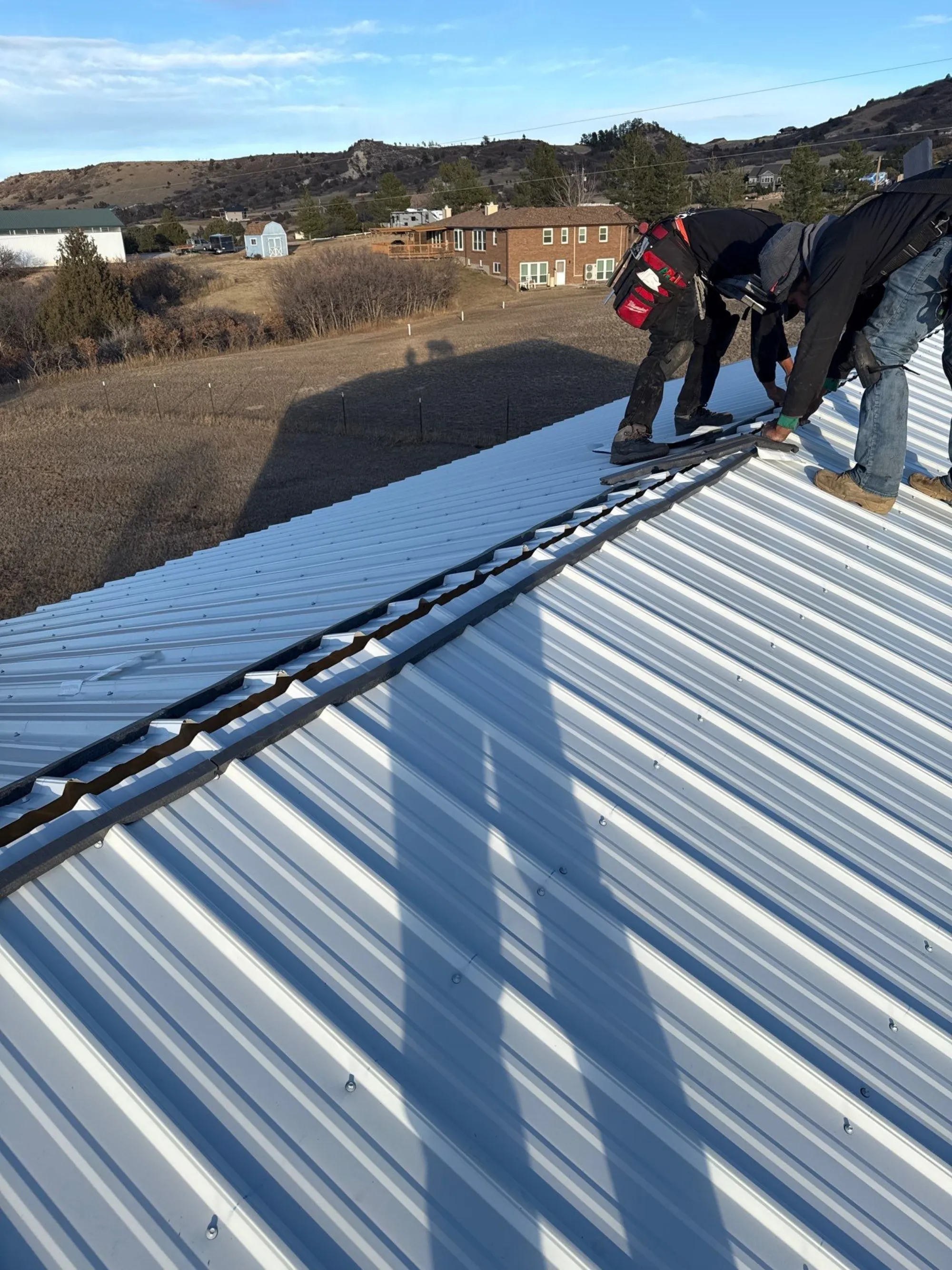
Metal Ridge Cap Detail
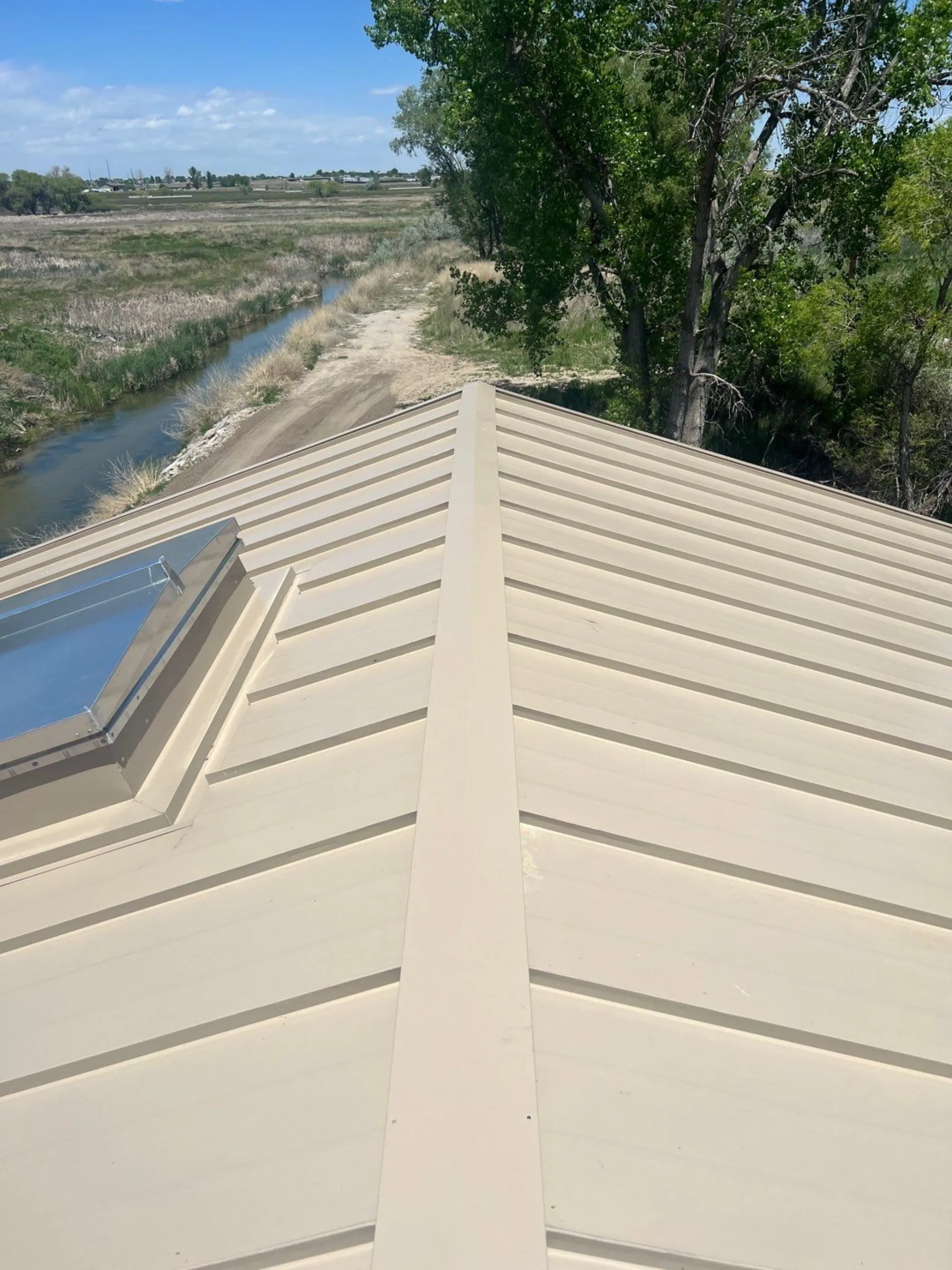
Metal & Skylight Detail
Pole Barn Gable Trim
Project photography from Red Hawk Roofing's own portfolio. All installations performed by licensed, insured Red Hawk crews.
Hail History in Aurora
Aurora has 5 documented hail days within 10 miles of city center between 2021 and 2026 — 5 confirmed by NWS storm-spotter reports on the ground, the largest 2.75-inch hail measured on May 30, 2024 (49 reports), where NOAA radar indicated 3.75 inches — 1.0 inch above the measured size. Radar figures are NOAA SWDI estimates (MEHS), not measurements; ground figures are NWS Local Storm Reports.
Aug 13
2026
1.75"
Measured
7 reports
radar 3.00" (+1.25")
LSR+SWDI
Jun 1
2026
1.75"
Measured
12 reports
radar 2.25" (+0.50")
LSR+SWDI
May 30
2024
2.75"
Measured
49 reports
radar 3.75" (+1.00")
LSR+SWDI
Jun 29
2023
2.00"
Measured
11 reports
radar 3.00" (+1.00")
LSR+SWDI
May 10
2023
1.75"
Measured
16 reports
radar 3.00" (+1.25")
LSR+SWDI
Measured figures are NWS Local Storm Reports — human-observed, ground-confirmed hail. Radar-indicated figures are NOAA SWDI estimates (MEHS, a radar algorithm calibrated to a high-end bound) — not measurements, and they can run high versus paired ground reports. Events within ~10 miles of Aurora center, 2021–present, ≥1.0 inch.
Loved our work in Aurora?
Scan to leave us a Google review for our Aurora office.